What This Review Looked At
Researchers from the National Institute of Laser Enhanced Sciences at Cairo University published a comprehensive review in Lasers in Medical Science examining how photobiomodulation influences immune responses. The review searched PubMed, Web of Science, and Scopus for studies published between 2000 and 2024, including original research, systematic reviews, and meta-analyses with a minimum evidence level of Level 2 according to Oxford Centre for Evidence-Based Medicine guidelines. The objective was to map the cellular and molecular mechanisms by which photobiomodulation alters immune function, assess its effects on specific immune cell populations, and evaluate its clinical applications across a range of immune-related conditions.
What They Found
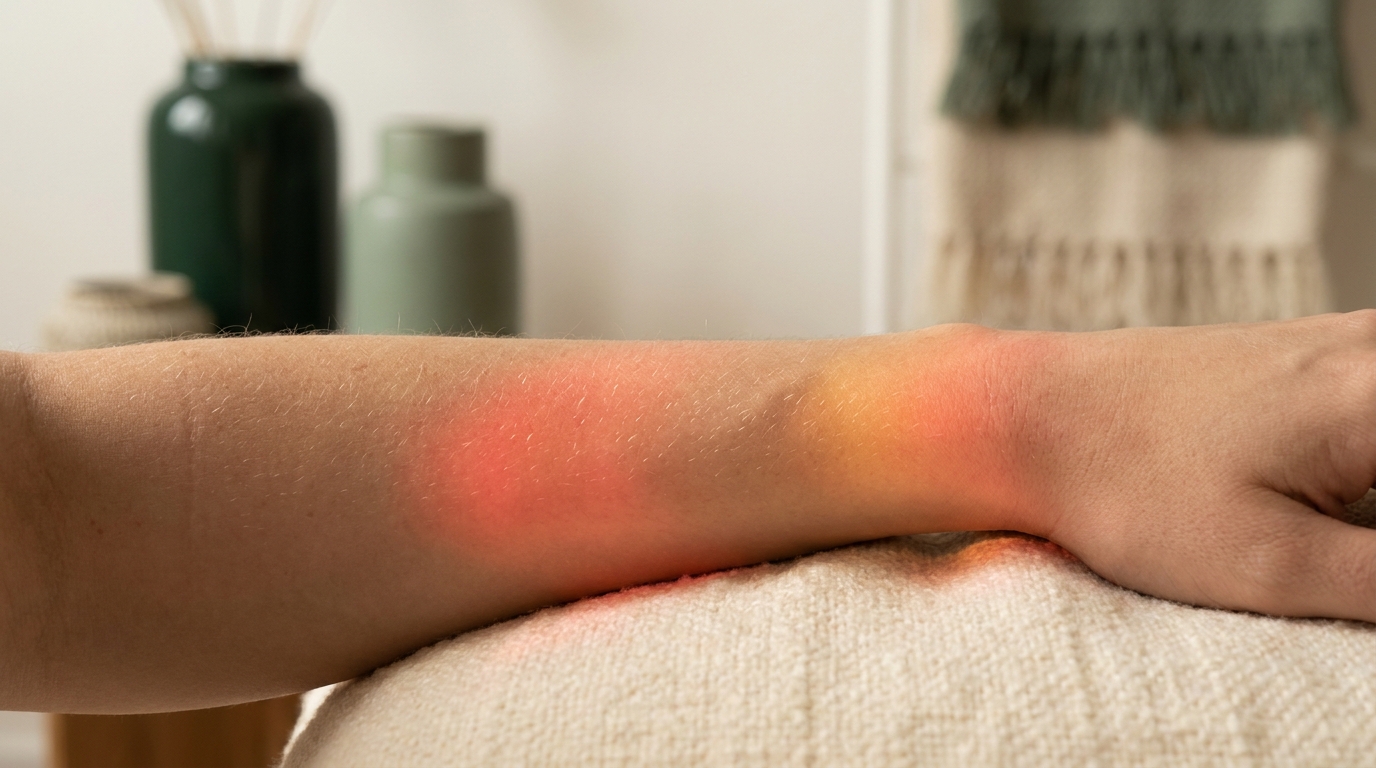
The review identified a consistent set of mechanisms through which photobiomodulation alters immune function at the cellular level. The primary site of action is the mitochondria. When cells are exposed to red or near-infrared light at 600 to 1000 nm, cytochrome c oxidase — a component of the mitochondrial electron transport chain — absorbs the photons. This triggers increased electron flow, a higher proton gradient across the mitochondrial membrane, and elevated ATP production. Studies have shown this can increase ATP output by up to 70% in certain cell types, providing immune cells with the energy required for rapid responses including cytokine production, phagocytosis, and cell proliferation.
Beyond energy production, photobiomodulation modulates reactive oxygen species in a dose-dependent manner. At lower doses it reduces excessive ROS in inflamed or stressed tissue, exerting an antioxidant effect. At higher doses in healthy cells it can transiently increase ROS as a signalling mechanism. This biphasic response allows for precise modulation of immune cell behaviour depending on the cellular context. The NF-κB pathway — a central regulator of inflammation — was found to be suppressible by photobiomodulation in pro-inflammatory conditions, with one study reporting up to 30% reduction in NF-κB activation in inflamed tissue. The MAPK pathways, including ERK and p38, were also modulated, influencing cell proliferation, differentiation, and cytokine production profiles.
On specific immune cells, the review found that photobiomodulation promotes macrophage polarisation toward the M2 phenotype — the anti-inflammatory, tissue-repairing state — with decreased production of TNF-α and IL-1β and increased secretion of IL-10 and TGF-β. In T cells, photobiomodulation promoted differentiation of naïve T cells into regulatory T cells, which suppress excessive immune responses and are particularly relevant in autoimmune contexts. In dendritic cells, photobiomodulation enhanced antigen-presenting capacity and influenced migration to lymph nodes, potentially improving immune surveillance efficiency.
Across clinical conditions, the review found the strongest evidence for rheumatoid arthritis, psoriasis, and wound healing. Randomised controlled trials in rheumatoid arthritis consistently reported pain reduction, improved joint mobility, reduced morning stiffness, and decreased pro-inflammatory cytokines. Multiple clinical trials in psoriasis showed significant improvement in PASI scores, reduced skin inflammation, and decreased T cell infiltration. For wound healing, photobiomodulation was found to optimise the inflammatory phase, promote M2 macrophage polarisation, enhance growth factor production, and support angiogenesis and tissue regeneration.
What This Means in Context
This is a narrative review and the authors acknowledge significant challenges in the field — primarily the lack of standardised treatment protocols across studies, which makes direct comparison difficult. Optimal wavelengths, power densities, session durations, and treatment frequencies vary considerably between trials, and the authors call for greater standardisation as a prerequisite for widespread clinical adoption. The review also notes important contraindications: photobiomodulation should not be applied directly to cancerous lesions or the thyroid gland, as it may stimulate cell proliferation in ways that are counterproductive in those specific contexts.
The safety profile across all reviewed conditions was consistently favourable. Mild and transient side effects such as temporary fatigue or headache were reported in a small minority of participants, with less than 8% of patients in one large study noting any side effects at all.
What It Means for You
If you are using red light therapy for recovery, inflammation, or skin health — or considering it for a condition with an immune or inflammatory component — this review provides a detailed mechanistic account of why it works. The evidence is particularly strong for conditions involving chronic inflammation, where photobiomodulation’s ability to shift immune responses toward a repair-oriented, anti-inflammatory state has been demonstrated across multiple well-controlled trials. As with any complementary approach, we encourage open dialogue with your treating physician.
Citation
Al Balah, O.F., Rafie, M., & Osama, A. (2025). Immunomodulatory effects of photobiomodulation: a comprehensive review. Lasers in Medical Science, 40, 187. https://doi.org/10.1007/s10103-025-04417-8